Setting up a workbench
End-to-end guide to creating, configuring, and running your first workbench
Prerequisites
Before creating a workbench you need:
- Any external tools (Datadog, Prometheus, GitHub, Slack, etc.) configured in Workbenches → Integrations. Tools can be added later, but it is easiest to have them ready before creating the workbench. See Workbench tools.
- If you plan to enable the coding agent, an
AgentRuntimeresource deployed to your management cluster. See Configure an AgentRuntime.
Creating a workbench
Navigate to Workbenches in the Plural Console sidebar and click Create workbench. The creation flow is a five-step wizard. You can jump between steps at any time; the Create workbench button on the final step activates once all required fields are valid.
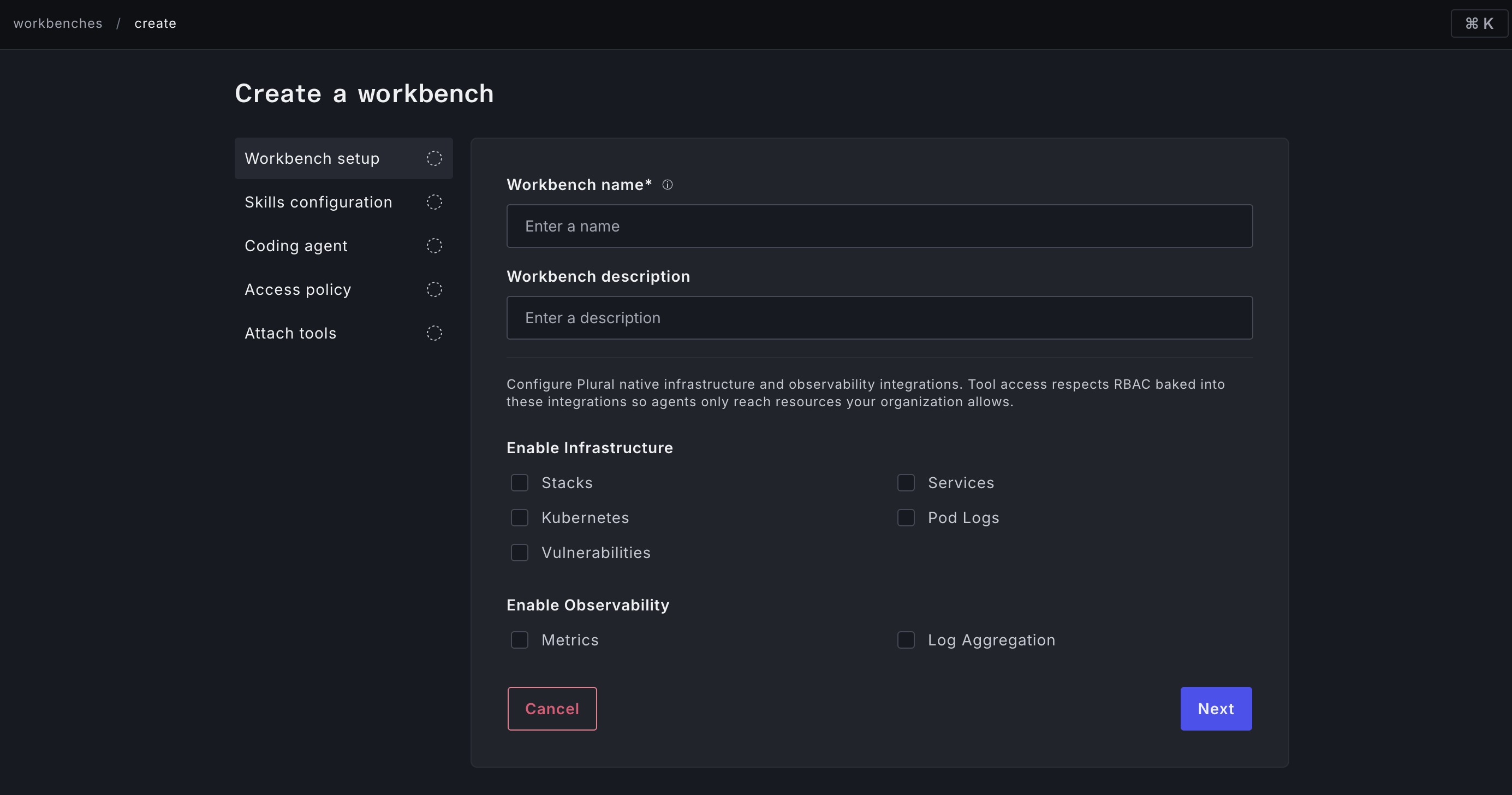
Step 1: Workbench setup
Name and description
Choose a name that reflects the agent's role — for example, platform-incidents, cost-analysis, or infra-self-service. The name must be unique within your Plural instance and is used in job logs, webhook confirmations, and chatbot messages.